
Sands: On the Run
Council Doubles Down on Flood Scheme FOI

Dumfries & Galloway Council has doubled down on a blatantly untenable position in a freedom of information request related to the Whitesands Flood Protection Scheme.
When asked to provide the public consultation representations required under section 104 of the Community Empowerment (Scotland) Act—a prerequisite when disposing or changing the use of common good—the council’s bizarre response was that they would ‘neither confirm nor deny’ whether they held the information.
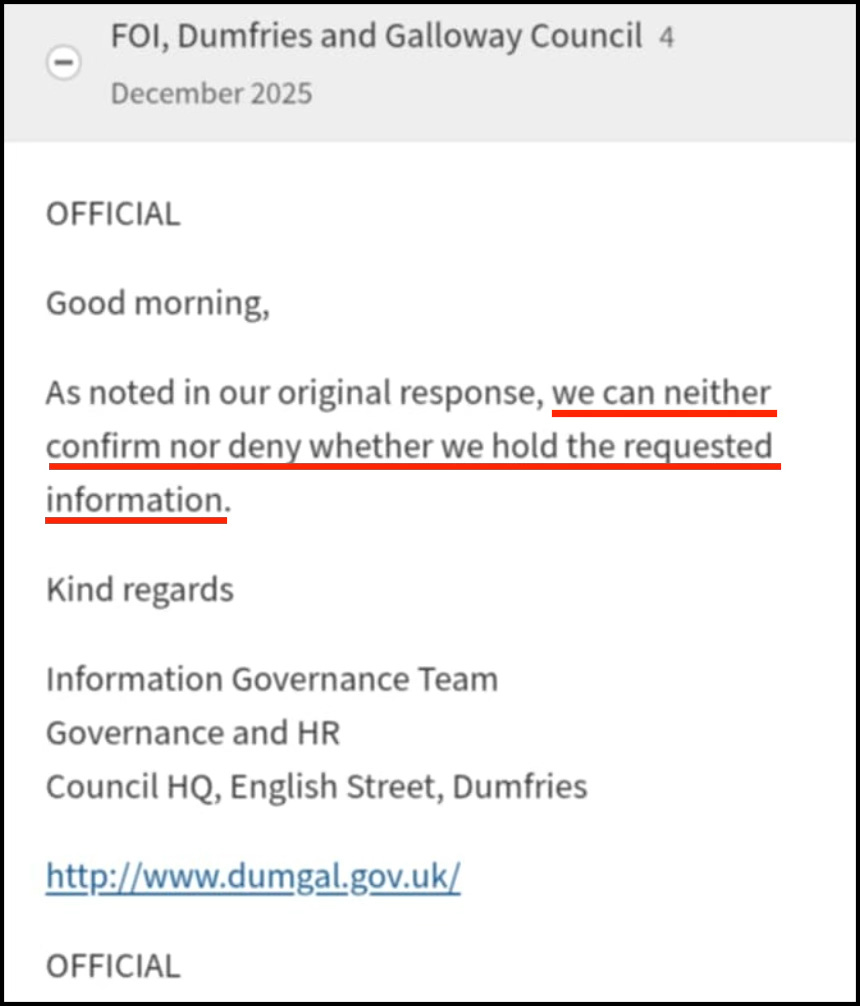
Even more bizarrely, the council FOI team then went on to ‘neither confirm nor deny’ whether a s104 consultation had even been done for the project. Scottish Government guidance states clearly that any representations are to be published onto the public record—something that DGC had no problem doing for other common good consultations such as the disposal of 5 St Andrews St in Castle Douglas.
The internal review—a full six weeks late—was predictable:
‘I have now concluded my review and I am satisfied that the Council has applied this exception correctly.’
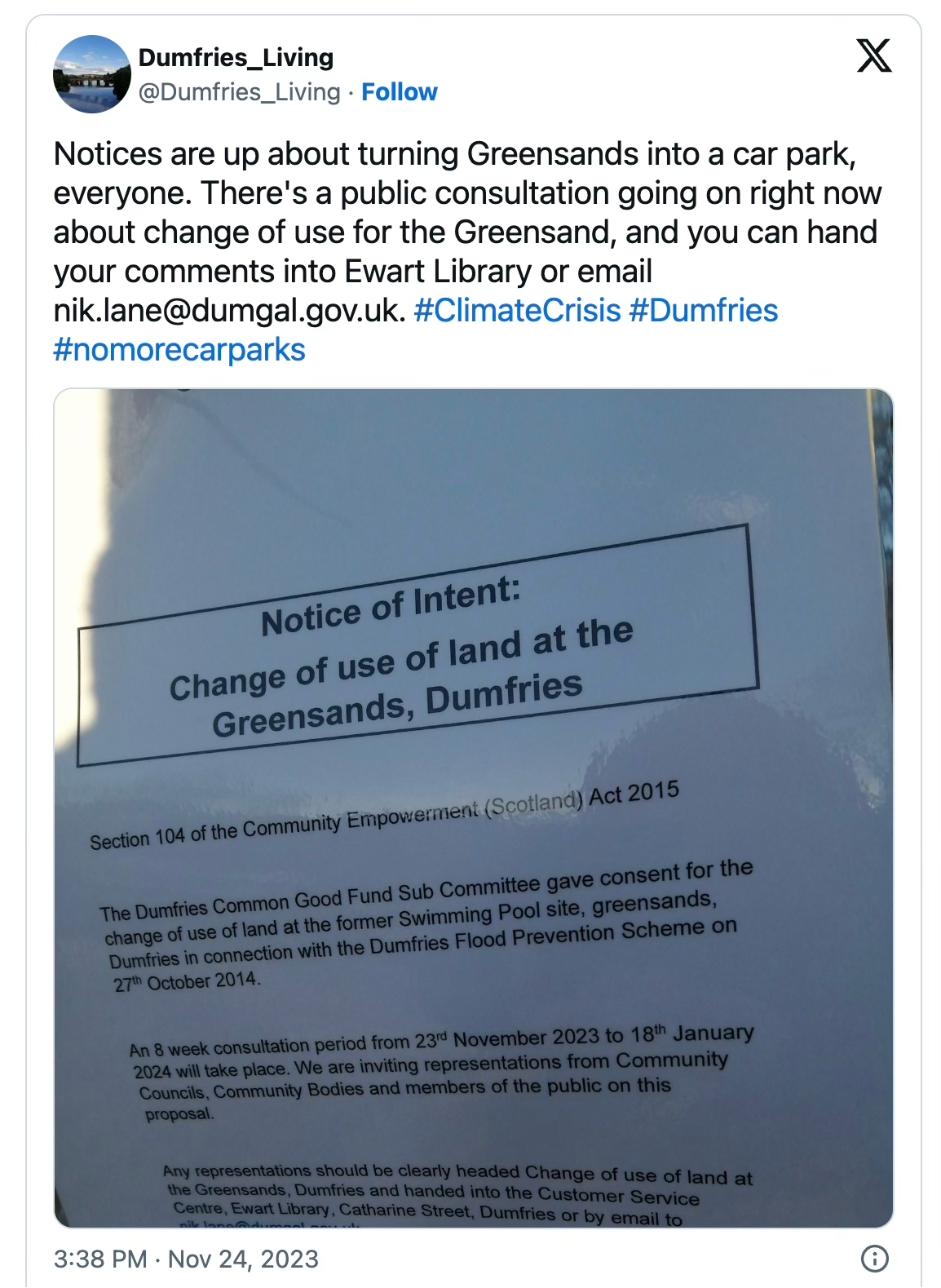
What makes this stranger still is that the very s104 consultation the council refuses to confirm or deny the existence of was advertised in notices placed in the Greensands in 2023.
An appeal has now been lodged with the Scottish Information Commissioner, with whom it is clear that such a non-response will never stand up to scrutiny. So why is the council so reluctant?
The council is reluctant because, with regards to breaches of both s104 and the s75(2) common good legislation we’ve reported on previously, they’re banged to rights. And they know it.
Dumfries & Galloway Council is in a desperate race against the clock, kicking the can down the road so that the Whitesands siteworks will have commenced before the truth about their mishandling of the common good finally surfaces, too late to make a difference.
They know that, if and when they are taken to court, they will not have a leg to stand on, and there’s an extremely high likelihood that an interdict would be granted, putting a stop to the works for the foreseeable future, perhaps even indefinitely.
Finally, since we’ve heard through the grapevine that some people are attempting to dismiss the relevance of an interdict, with some nonsense along the lines of ‘they’ll just get it overturned’, we end with an explanation of what an interdict does, keeping it simple for the hard of understanding:
In Scots law, an interdict is a court order that stops the Council from acting — in this case, it would bar any works on inalienable Common Good land unless and until they comply with s75(2) and get court consent. If granted, it cannot simply be ‘overturned’.
Hope this helps.
DoD
Right of Reply: Contact DoD@DeclarationofDumfries.co.uk with additional or alternative information. Anonymity guaranteed.
Absolutely love this article! Especially the 'They'll just get it overturned' that statement was obviously made by someone who hasn't got a fkn clue!!