
We Have the Evidence
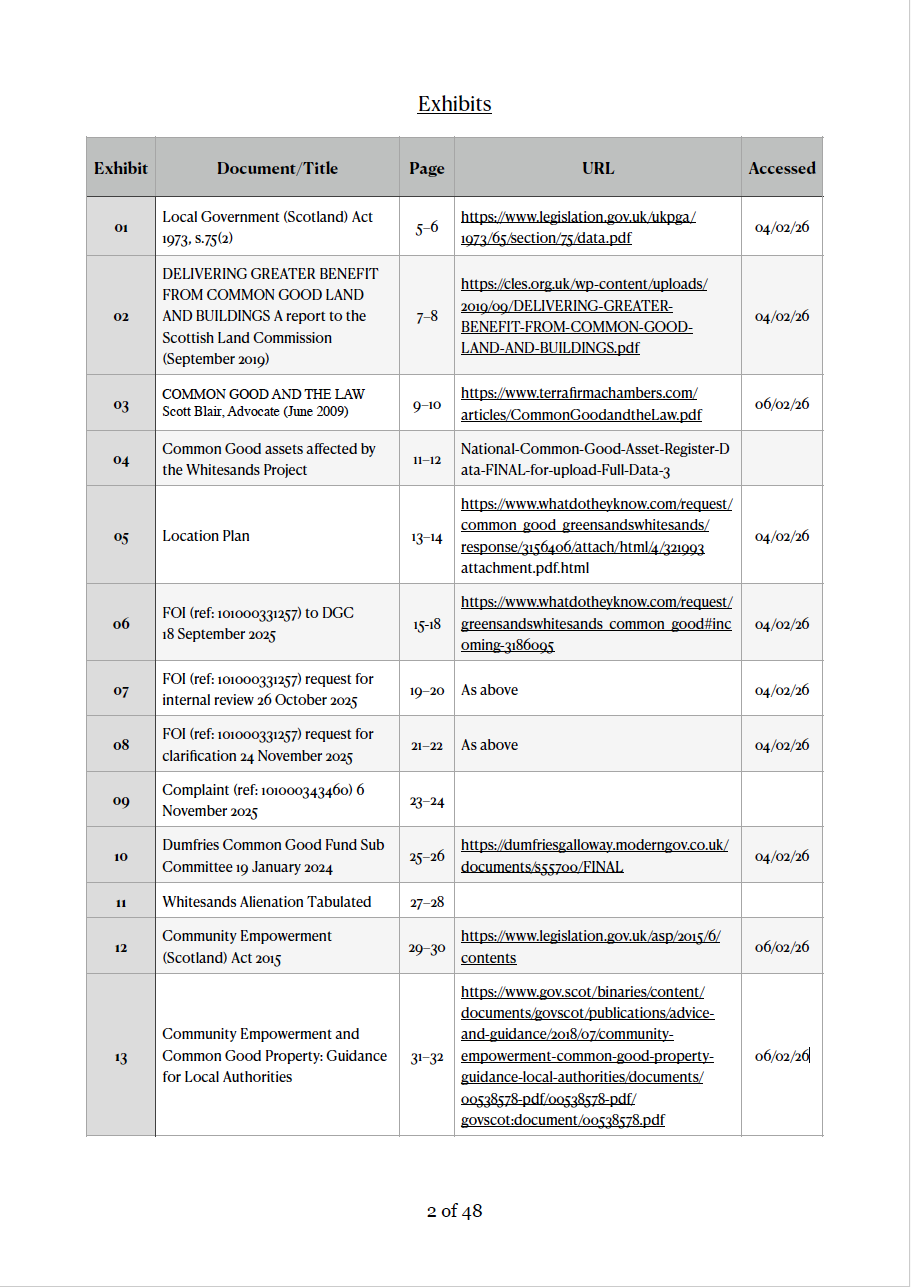
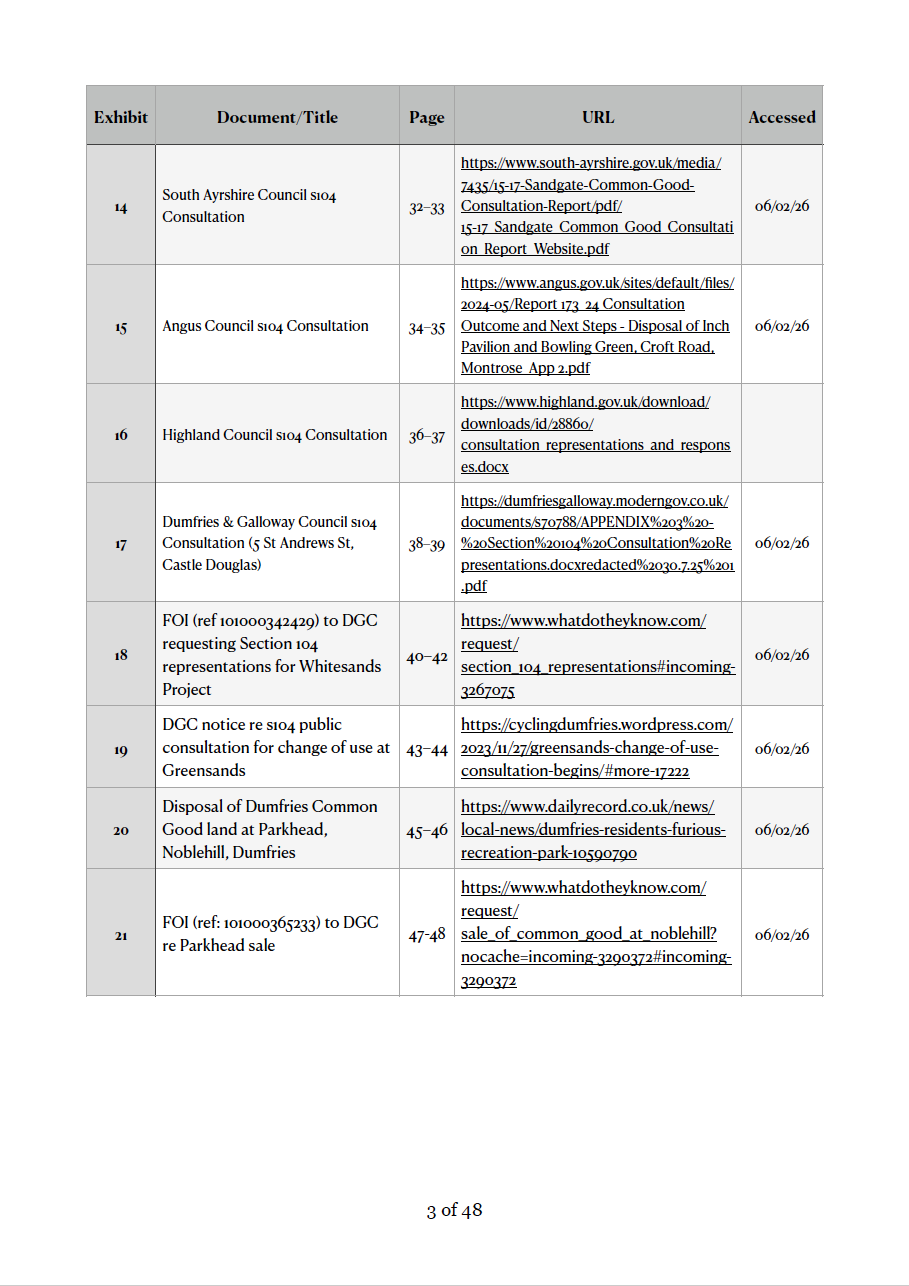
Download DoD's Whitesands s75(2) Common Good Evidence Pack

FOR THE PUBLIC RECORD
Declaration of Dumfries has now made available the current basis for the legal challenge against Dumfries & Galloway Council and its unlawful appropriation and disposal of the common good assets affected by the Whitesands Flood Protection Scheme.
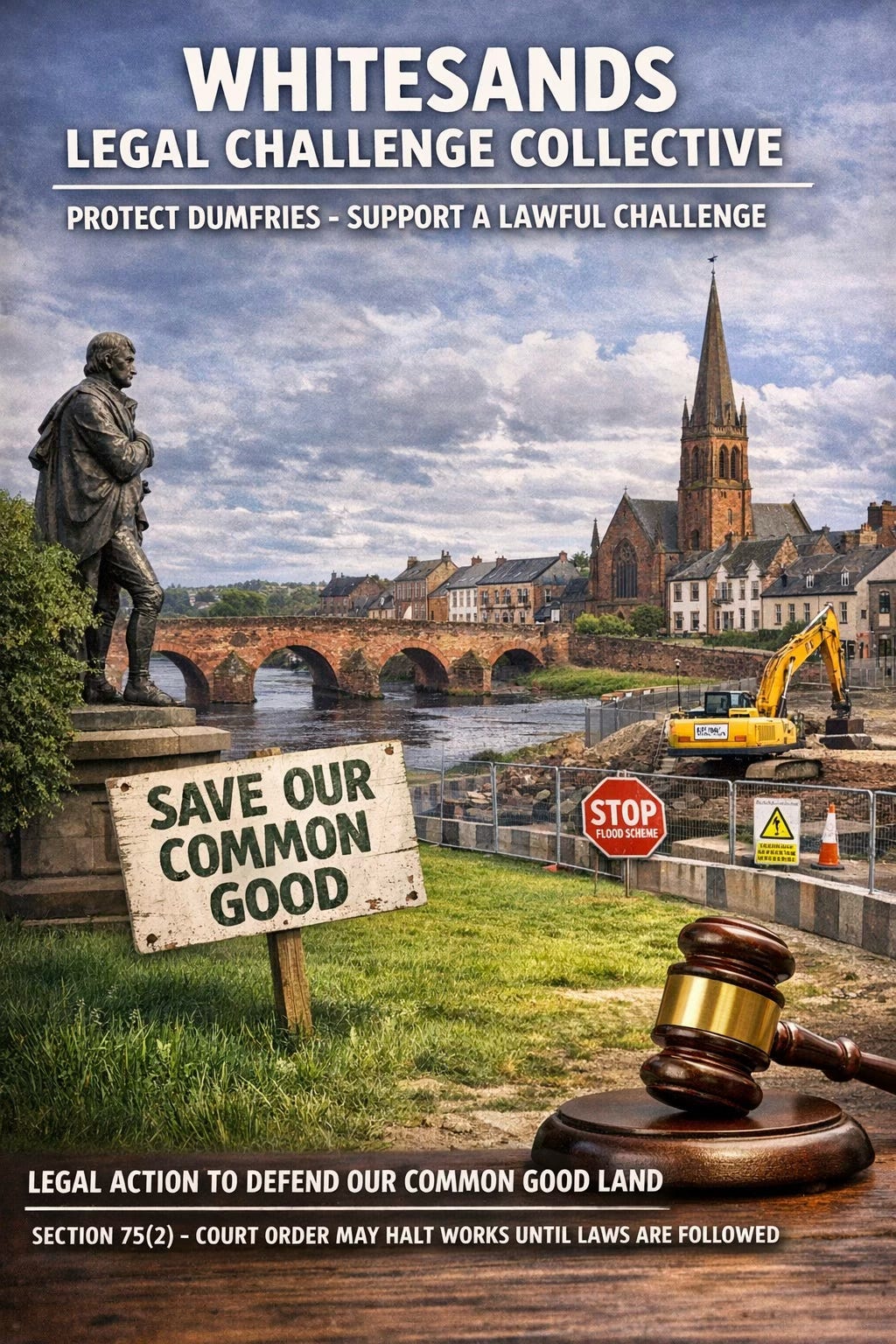
The exhibited evidence highlights, beyond any shadow of doubt, DGC’s underhand tactics—including falsehoods, lies, contradictions, obfuscation and red herrings—designed to delay proper scrutiny of their clear malfeasance in the hope that the genie is out of the bottle once the contractor physically commences siteworks for their doomed-to-failure, white elephant anti-flooding scheme.
This document will be amended as and when more evidence arrives.
Free to download and share far and wide.
DoD
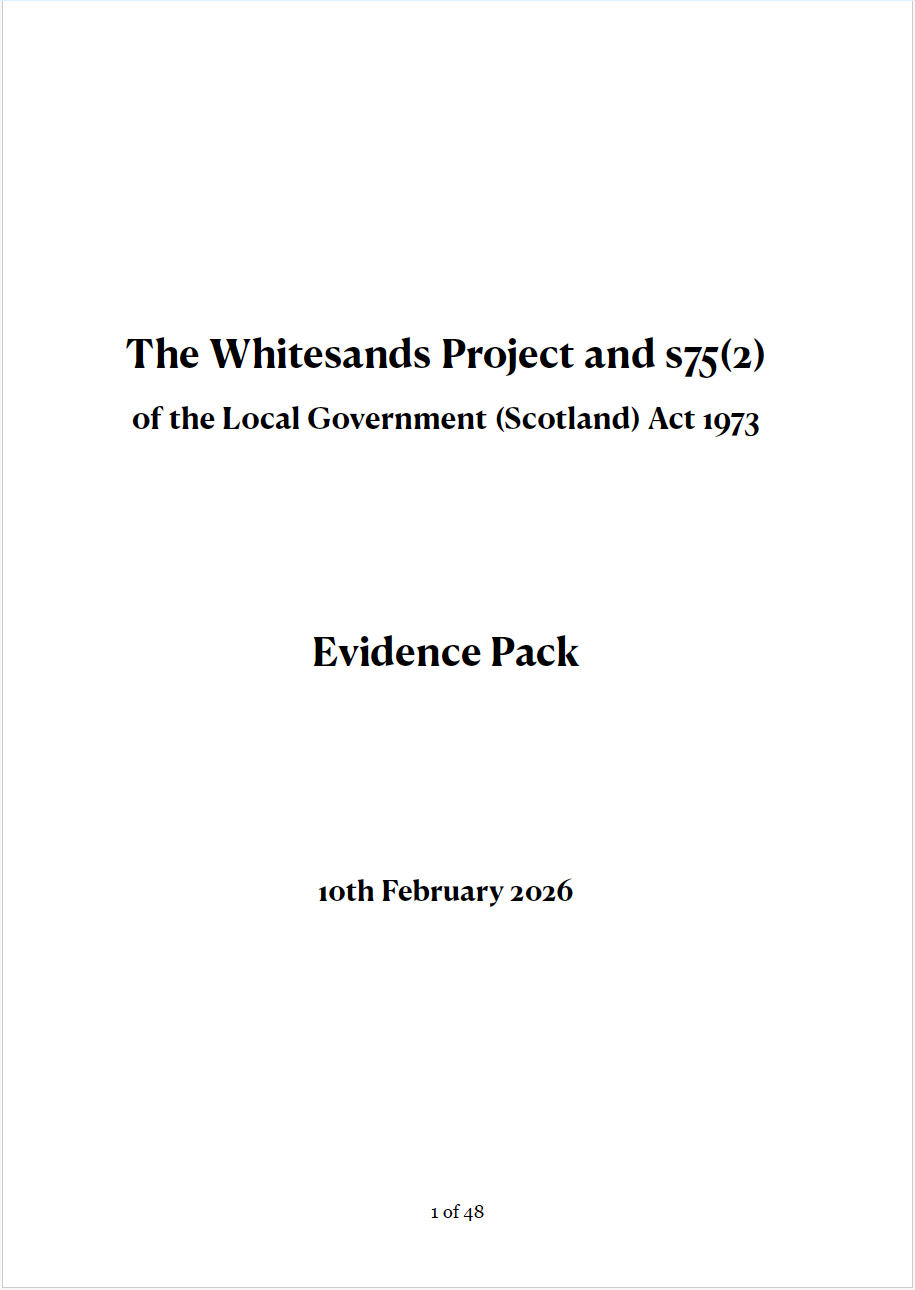
Download 48-page PDF here:

Summary
• Dumfries & Galloway Council (DGC) has neglected to fulfil its statutory obligations with regards to the Whitesands Flood Protection Scheme by failing to apply to court for permission to appropriate and/or dispose of the inalienable Common Good land and assets affected, pursuant to s75(2) of the Local Government (Scotland)Act 1973.
• DGC has refused to explain the reasoning behind their exemption from s75(2), citing legal privilege. This contradicts the Council’s obligation to operate with transparency and accountability, especially with regards to Common Good assets administered on behalf of the public.
• The people of Dumfries have thus been denied the opportunity to raise any objections to the disposal/appropriation of the Common Good before a sheriff, who may have imposed such conditions in relation the Common Good as they deemed necessary in accordance with s75(2), had the process been properly followed.
• Moreover, the Council would ‘neither confirm nor deny’ whether they held the representations required under section 104 of the Community Empowerment (Scotland) Act 2015, despite chapter 5.8 of the Community Empowerment and Common Good Property: Guidance for Local Authorities document making it ‘clear that all representations will be published.’
• Furthermore, when asked whether a s104 consultation had even been carried out for the Whitesands Project, DGC would once again ‘neither confirm nor deny’ whether they had done so—a wholesale disregard of a local authority’s duty of candour and accountability, and further prima facie evidence of breach of statutory obligation.
• It would appear that DGC are proceeding with Whitesands project solely on the basis of permission ‘granted’ by the Dumfries Common Good Subcommittee on 27 October 2014. A common good subcommittee does not possess authority to appropriate or dispose of inalienable Common Good assets, however; only a sheriff or the Court of Session can grant authority for such alienation as stipulated under s75(2) of the 1973 Act.
• DGC has been obstructive and evasive throughout, even contradictory and factually incorrect on occasion. As a result, several Whitesands FOISA requests are now being investigated by the Scottish Information Commissioner.
• DGC was equally as evasive in an FOI requesting details of the sale of common good land at Parkhead, Noblehill, Dumfries in 2017, refusing to disclose their justification for classifying parkland, which has served as public open green space since time immemorial, as ‘alienable’— once again citing legal privilege—and once again directing to the Registers of Scotland website for title deeds that do not show in a search on that portal. This indicates a potential pattern of circumventing Common Good legislation when it comes to high value projects, with Parkhead being sold for a proposed housing scheme. I believe Parkhead was eventually sold back after a public pressure campaign, but nothing to do with s75(2) or s104 as far as I’m aware.
• The same occurred with requests for the Whitesands/Greensands/Dock Park/Public Conveniences title deeds, i.e. directed to RoS website where no such documentation can be found.
• While legal advice itself may be subject to privilege, the Common Good charters/deeds relied upon to determine Common Good alienability and title conditions ought to be disclosable under FOISA regulations and not subject to legal privilege. Alternatively, the fact of their non existence ought to be disclosed. Instead, DGC has provided nothing at all in this regard.
Wow a substantial body of evidence. How can they weasel their way out of this. Excellent work DoD.